
Fascia Stretch Therapy Whitby
When Your Body Feels Stiff but Nothing Seems Injured
Your neck does not turn easily. Your shoulders feel heavy. Your hips feel restricted when you walk. You stretch, maybe even get a massage, yet the relief never really lasts.
In many cases the problem is not just the muscles or joints — it is the fascia.
Fascia is a thin but very strong connective tissue that surrounds and supports every muscle, joint, nerve, and organ in the body. When it glides smoothly, movement feels easy and natural. When it becomes tight or restricted, the body begins to feel stiff and uncomfortable, often in places far from where the actual restriction exists.
Fascia Stretch Therapy is designed specifically to address this.
What Is Fascia Stretch Therapy?
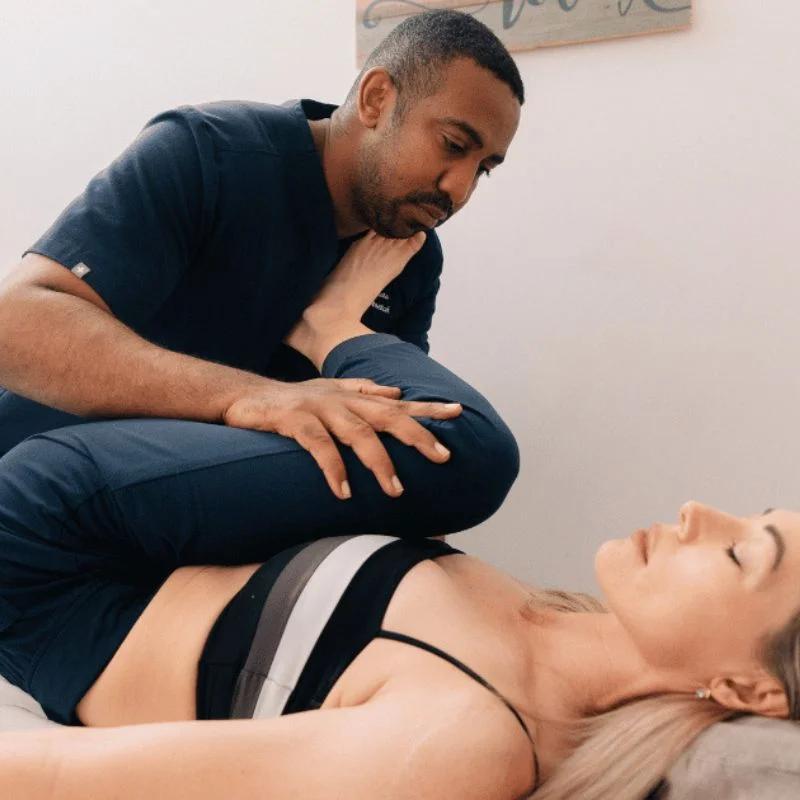
Fascia Stretch Therapy (FST) is a gentle hands-on treatment performed by a registered physiotherapist. It uses assisted stretching and guided movement to improve mobility throughout the entire body.
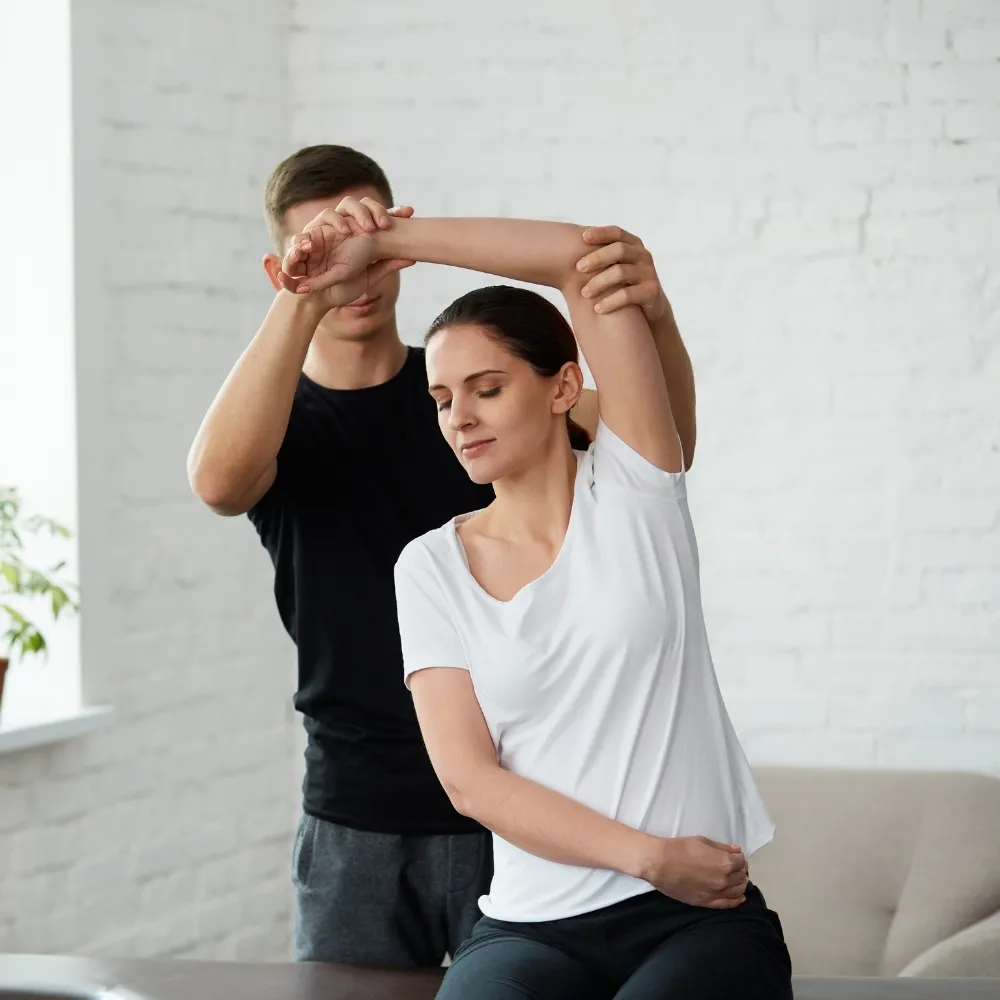
Unlike stretching done on your own, your body remains relaxed while the physiotherapist carefully moves you. When you stretch yourself, your nervous system often activates protective tightening in the muscles. During assisted stretching, your body relaxes and allows deeper tissues to release safely.
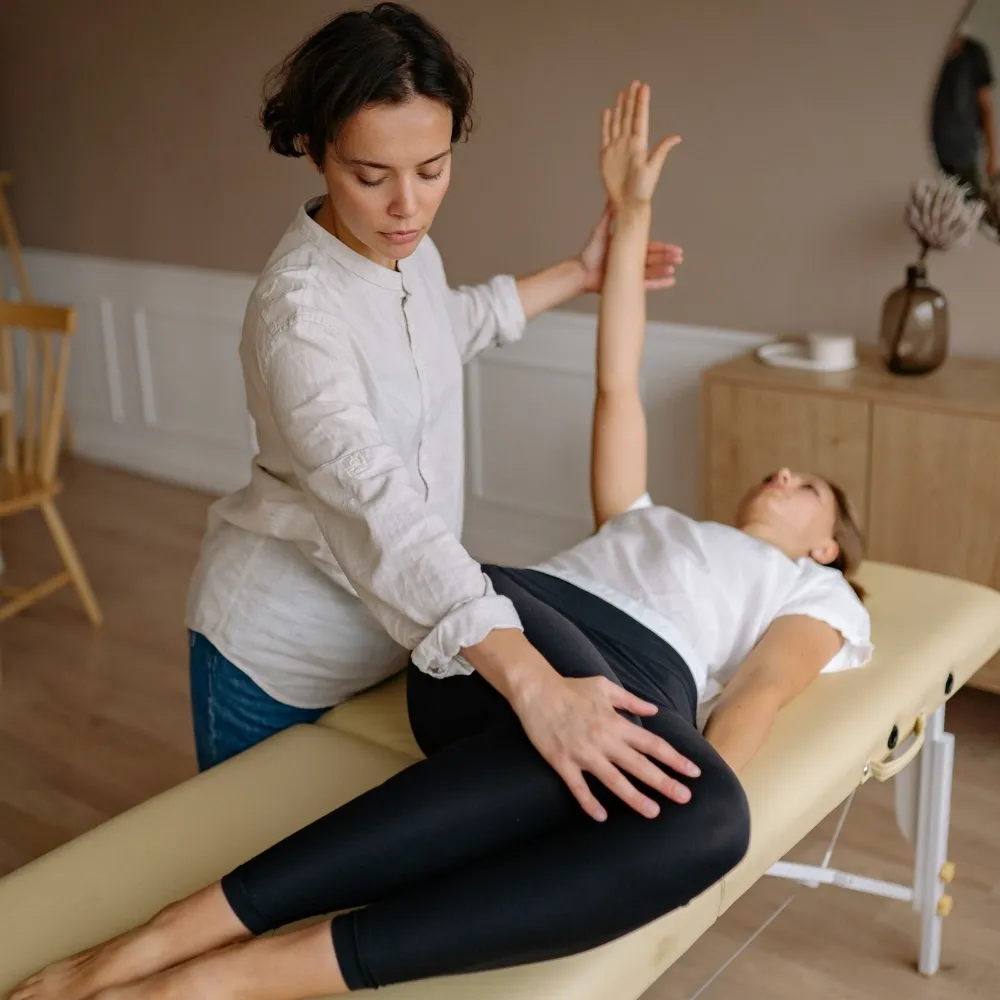
The physiotherapist guides your body through slow, controlled movements including lengthening, rotation, and natural movement patterns. Instead of stretching a single muscle, the treatment addresses full movement chains, which is how your body actually functions in daily life.
The treatment is comfortable and should feel like a deep relieving stretch — never forced and never painful.
Why We Focus on Fascia
Lower back pain may come from tight hips. Shoulder pain may relate to chest or ribcage restriction. Knee discomfort can be influenced by ankle or hip mobility.
Fascia connects different parts of the body in continuous chains. When one area tightens, tension spreads into other regions and creates compensation patterns. This is one of the main reasons people experience recurring pain even after rest, medication, or isolated treatments.
Fascia Stretch Therapy focuses on correcting the underlying movement restriction rather than only treating the sore area.
What Conditions Can It Help?
Many people describe a feeling that their body is tight everywhere or that pain seems to move around without a clear cause. Others notice their range of motion has decreased, making simple activities such as reaching overhead, turning while driving, or bending to tie shoes more difficult.
It is also helpful after injury or surgery. When tissues heal, scar tissue forms — and scar tissue is made of fascia. If it remains tight, movement stays limited even after healing has occurred.
Fascial restrictions frequently do not appear on imaging tests such as X-rays or MRIs, which is why people are sometimes told everything looks normal despite persistent discomfort.
Who Benefits Most?
Long sitting tightens the hips, chest, and shoulders and gradually leads to neck and back strain. Active individuals develop repetitive movement patterns that overload certain areas. Adults often notice increasing stiffness with age because fascia loses elasticity and hydration over time.
It is particularly helpful for people who stretch regularly but never feel lasting improvement. In these situations the restriction usually exists deeper than the muscle.
What Happens During Your Visit
Your first appointment begins with a detailed physiotherapy assessment. We evaluate posture, movement patterns, and joint mobility while also discussing your daily activities and what movements have become difficult. If you’re new to the process, learning how physiotherapy works can help you feel more prepared for what to expect.
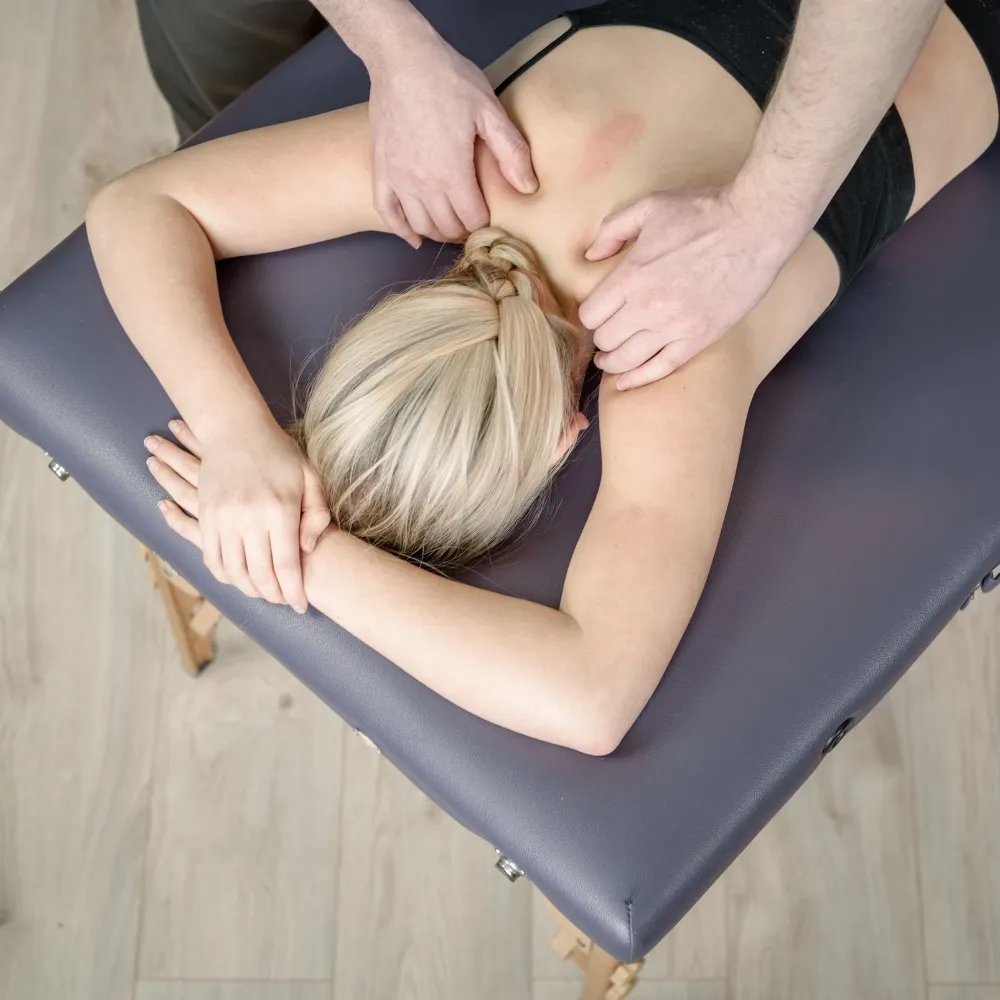
During treatment you remain fully clothed in comfortable clothing such as athletic wear. You lie on a treatment table while the physiotherapist gently guides your body through assisted stretches. Movements are slow and controlled and are adjusted based on how your body responds.
Sessions usually last between 30 and 60 minutes. Many patients notice a feeling of looseness and easier movement immediately afterward.
You may also receive simple movements to maintain the improvement between visits.
How It Helps Your Nervous System
Why Assisted Stretching Works
During Fascia Stretch Therapy your body is supported and relaxed. Because you are not doing the work, your nervous system allows a greater range of motion safely and the fascia can release more effectively.
This is why patients often experience improvement even after the first session.
How Fascia Influences Overall Health
Breathing may feel easier since fascia surrounds the ribcage and diaphragm. Some people report fewer tension headaches, improved sleep, and more energy because the body is no longer holding constant background tension.
Fascia affects the entire body, so restoring its movement can influence multiple systems at the same time.
Our Treatment Approach
At Kinesis Physiotherapy & Rehabilitation Centre, Fascia Stretch Therapy is integrated into a complete physiotherapy plan. Treatment may also include manual therapy, movement retraining, and exercise therapy when appropriate.
The goal is not only to reduce symptoms but to restore normal movement patterns so the problem does not repeatedly return. Some people need only a few sessions for a specific issue, while others choose occasional maintenance care to stay mobile and prevent future problems.
Serving the Durham Region
When Should You Consider It?
Many people assume stiffness is a normal part of aging. Often it is simply a mobility restriction that can be improved when addressed early.
Take the Next Step
Your body is designed to move comfortably. When fascia becomes restricted, the body compensates and discomfort develops.
Fascia Stretch Therapy helps restore natural movement patterns and allows your body to function the way it should. Contact Kinesis Physiotherapy & Rehabilitation Centre to book a physiotherapy assessment or ask questions about whether this treatment is right for you. Most extended health insurance plans cover physiotherapy services.
Sometimes the body is not damaged — it is simply restricted.
And once it moves properly again, many symptoms improve naturally.